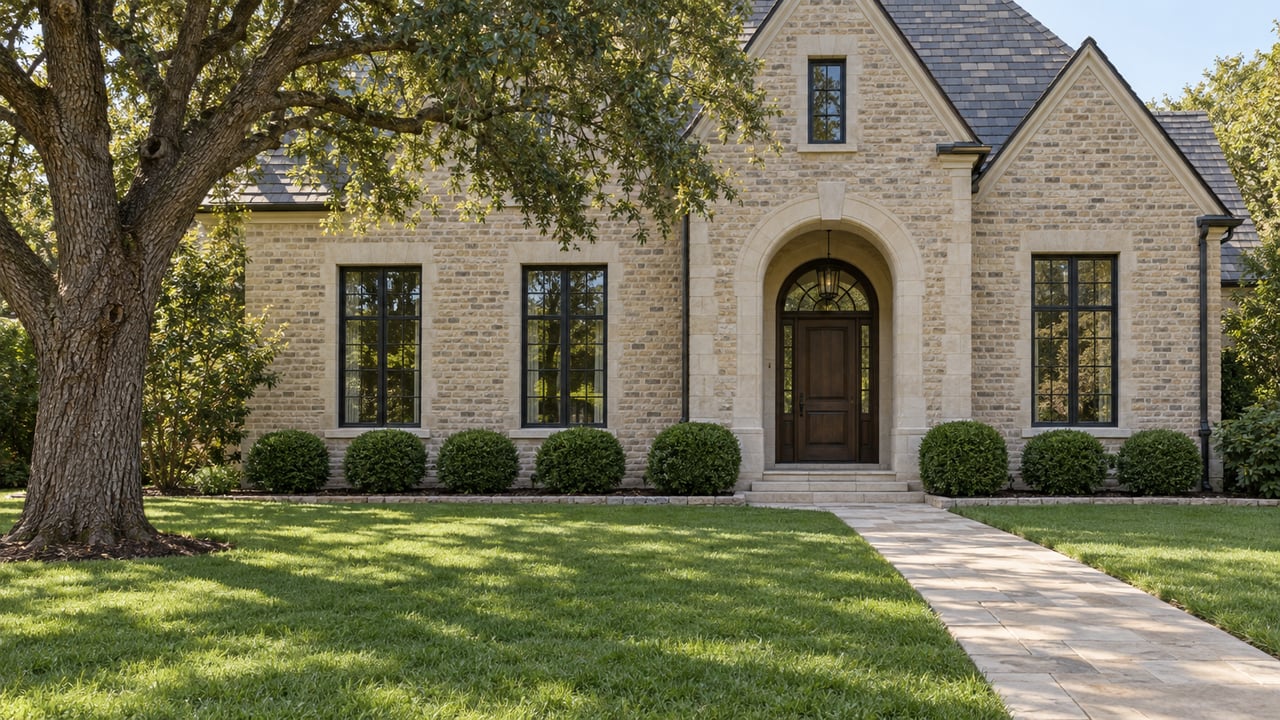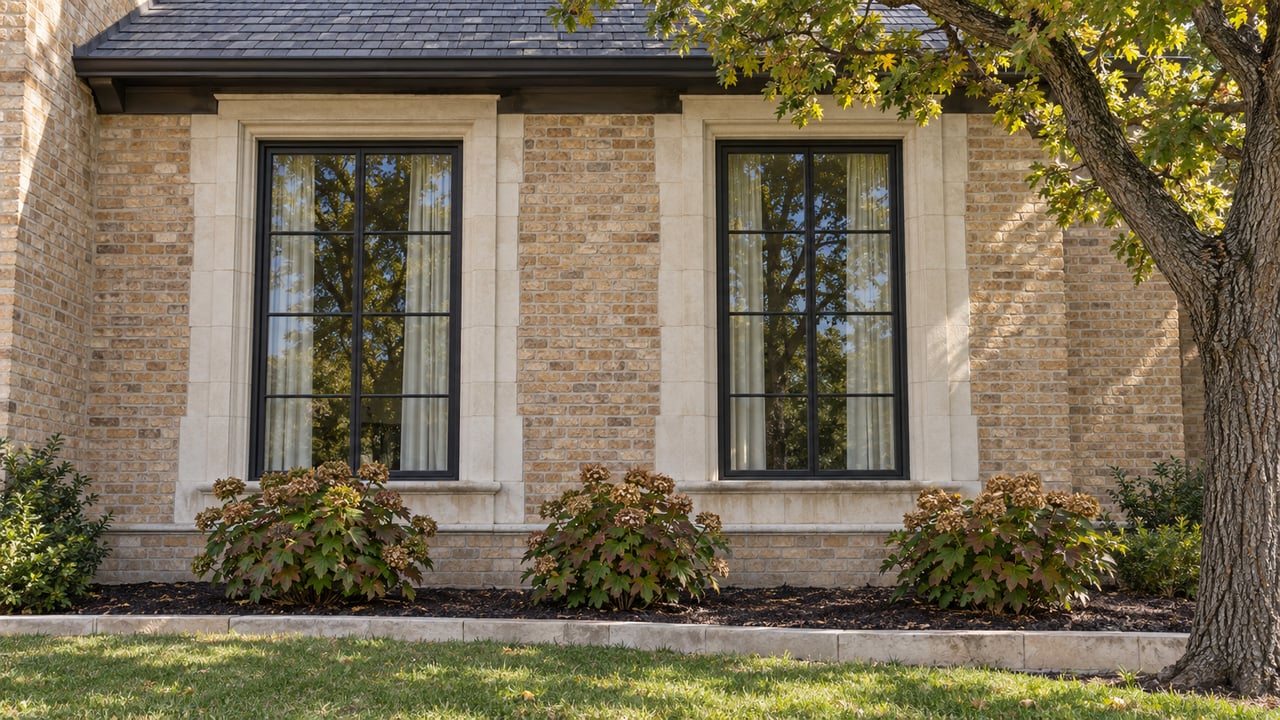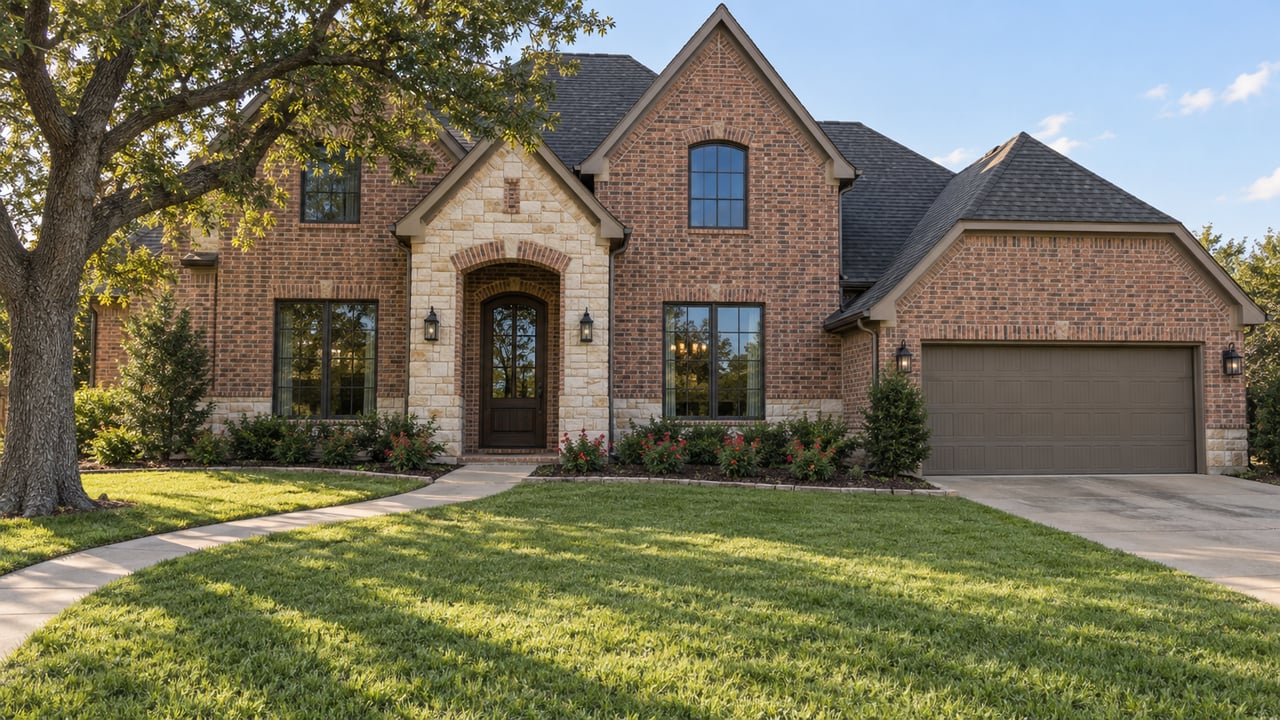
In much of western Flower Mound, the baseline rule is one home per two acres, on a lot at least 200 feet wide. A developer who wants smaller sites can use the conservation option, with dwelling sites as small as three-quarters of an acre. In exchange, at least a quarter of the lots must be an acre or larger, nearly half the land must stay open, and the overall density still cannot go above one home per two acres. Those numbers shape how land gets used in the west, and they explain why new homes in the area arrive in small, separately negotiated batches.
You would expect that kind of rationed supply to give sellers the upper hand. The September 2026 figures say otherwise. Flower Mound's inventory is as tight as Highland Village's and Lewisville's, yet its sellers are giving up more at the closing table than sellers in either town, and about as much as sellers in Frisco, where inventory is far looser.
The September Numbers That Don't Fit the Scarcity Story
The Texas Real Estate Research Center at Texas A&M produces the monthly North Texas MLS summary that MetroTex publishes. The September 2026 report puts Flower Mound beside three nearby cities. Here are single-family resales for September 2026:
| City | Median price | Sold-to-list ratio | Days on market | Active listings | Months of inventory |
|---|---|---|---|---|---|
| Flower Mound | $638,000 | 93.5% | 50 | 249 | 3.2 |
| Highland Village | $650,000 | 95.3% | 43 | 53 | 3.2 |
| Lewisville | $380,000 | 95.2% | 42 | 160 | 3.0 |
| Frisco | $669,500 | 93.3% | 55 | 847 | 4.9 |
Flower Mound and Highland Village had the same months of inventory, yet Flower Mound homes sold nearly two points further below list. Frisco had about half again as much inventory, and its sold-to-list ratio was almost the same as Flower Mound's.
The year-over-year change makes this sharper. In September 2025, Flower Mound sellers got 95.8% of list price, homes sat for 34 days, and the median was $650,000. A year later the ratio had fallen to 93.5%, days on market had risen to 50, and the median had slipped to $638,000. Months of inventory hardly moved, going from 3.0 to 3.2. Frisco moved the other way over the same year. Its sold-to-list ratio rose from 92.0% to 93.3%, and its median rose from $650,000 to $669,500.
One month of Flower Mound data rests on 58 closed sales, so treat it as a snapshot. The August 2026 report points the same way. Flower Mound had 3.2 months of inventory then too, and days on market went from 38 in August to 50 in September. Flower Mound's inventory stayed tight even as homes took longer to sell.
How the Town Holds Supply Down
The tight inventory comes straight from the rules. New residential supply in Flower Mound has to pass through a series of checks, and each one cuts down what gets built:
- The density cap. Ordinance 54-22, which Town Council adopted on November 7, 2022, holds conservation developments in the Cross Timbers Conservation Development District to one home per two acres.
- The lot mix and open space. At least 25% of lots must be an acre or larger, and at least 45% of the gross project area must remain open space.
- SMARTGrowth review. The town's SMARTGrowth analysis scores applications pass or fail on each applicable criterion. An application that fails a criterion is to be denied until it can comply.
- The vote threshold. If Planning and Zoning recommends denial, Council needs four votes to approve. In February 2026, Community Impact reported that a proposed indoor self-storage facility was denied on a 3–2 vote, because three votes fell short of the four the rule required.
Taken together, these checks mean each large project goes through its own long negotiation. That review process caps how fast supply can grow, whatever demand looks like.
What the Pipeline Looks Like Up Close
The decisions of the last two years show how slowly the pipeline moves.
Eden Ranch. This 335-acre project sits inside the conservation district. Cross Timbers Gazette reported that Council approved its updated master plan late on November 3, 2025, after hours of reworking. The vote was 4–1, just enough for the required supermajority. Mayor Pro Tem Ann Martin voted no, telling the paper, "It's a lot of exceptions for a development that is supposed to be part of a conservation district." Council approved one lot as narrow as 100 feet and 25 others between 110 feet and the town's 150-foot standard, down from nearly 50 narrower lots in the request. Council also required a special use permit for any accessory dwelling unit.
Canyon Falls. On January 20, 2026, Council unanimously approved a final subdivision of 65 single-family lots and six open-space lots on 27 acres, with a 10,000-square-foot minimum lot size. Community Impact reported that the development plans 795 homes in total, below its 972-home cap.
Havenwood. On March 2, 2026, Council approved an 87-home first phase within the 447-acre west Flower Mound development, which can hold up to 222 residential lots in total, according to Community Impact.
Lakeside East. In March 2025, Planning and Zoning denied a request to move already-approved residential units from the west side of FM 2499 to the east side. Cross Timbers Gazette reported that the applicant said it would otherwise go ahead under the existing zoning.
Add up the phases approved this calendar year and you get 152 homes across two subdivisions. That is about how many single-family homes closed in Frisco in September 2026 alone.
The State Law That Stops at 150,000
In 2025, the Texas Legislature passed a law aimed at exactly this kind of lot-size control. Senate Bill 15 took effect September 1, 2025. On qualifying tracts, it bars covered cities from requiring residential lots larger than 3,000 square feet, wider than 30 feet, or deeper than 75 feet. According to the enrolled bill text, it applies only to cities with "a population of more than 150,000" that sit at least partly in a county of more than 300,000. Even then, it covers only unplatted single-family tracts of five acres or more.
The North Central Texas Council of Governments' 2026 population estimates put Flower Mound at 82,870 and Frisco at 241,538 as of January 1, 2026. Cross Timbers Gazette reported in August 2025 that Flower Mound and other smaller southern Denton County towns were spared from the new state housing reforms. In March 2025, the town's leaders had gone to Austin to testify against the bills. The Gazette reported that Councilman Adam Schiestel warned SB 15 could raise the town's projected population cap from 120,000 to 260,000.
So the two markets in the table above now run under different supply rules. Frisco's unplatted single-family tracts fall under the state law, and Flower Mound's large-lot rules stay as they are.
Why Scarce Supply and Softer Pricing Can Coexist
Months of inventory divides active listings by the recent pace of sales. Flower Mound's ratio held steady over the past year because both sides of it moved at once. Active listings went from 222 to 249, while September closings fell from 65 to 58 and pending sales fell from 65 to 50. A flat ratio can hide a market where fewer buyers are signing contracts each month.
The town's rules limit how many new homes get built. They do nothing to hold up the price on any single resale listing. When demand cools, a capped market still has fewer buyers each month, and the sellers who are listed have to compete for them. In September 2026 that competition showed up as longer days on market and a wider gap between list and sale price. The listing count barely changed.
There is also a lag in how sellers set their asking prices. Flower Mound's reputation for scarcity is real, and sellers can reasonably price with it in mind. The September data shows buyers paying less than those asking prices.
What This Means When You Write an Offer
For a buyer comparing Flower Mound with Frisco or Highland Village, the practical point is that low inventory and negotiating room can exist together here.
- Watch days on market for each listing. With the town's typical home taking 50 days to sell in September 2026, a listing well past that mark has probably already met resistance on price.
- Look at sold-to-list ratios for similar homes. Your agent can pull the figures for similar sales, and they tell you more about your offer than the town median does.
- Ask about phase timing on new construction. Canyon Falls, Havenwood and Eden Ranch each arrive in approved phases. When the next phase opens, buyers get more choices, and resale sellers nearby face more competition.
This post describes local and state land-use rules for general information. It is not legal, tax or financial advice. Confirm how any rule applies to a specific property with the appropriate professional.
Quick Answers
Does Texas SB 15 apply to Flower Mound? No. The enrolled bill covers cities of more than 150,000 people, and NCTCOG estimated Flower Mound at 82,870 as of January 1, 2026.
Can new homes in the Cross Timbers district be built on lots smaller than two acres? Yes, through the conservation-development option. Ordinance 54-22 allows dwelling sites down to 0.75 acre, provided the overall density stays at one home per two acres, at least 25% of lots are an acre or more, and at least 45% of the land is open space.
Is Flower Mound a buyer's market right now? By months of inventory, no. In September 2026, Flower Mound had 3.2 months, compared with 4.9 in Frisco. Its sold-to-list ratio was 93.5%, which shows real negotiating room even with that tight inventory.
If you're weighing a Flower Mound home, either buying or selling, Christian Smith Real Estate Group can show you where your street sits in this gap between asking and sale price, using recent comparable sales instead of the town-wide median. Request Your Personalized Home Valuation, and we'll show you what similar homes near you actually sold for compared with their asking prices.